

A Molecular Case for Steak?
Higher miR-15b-5p expression correlated with 64% lower insulin resistance markers—but only in the beef group.

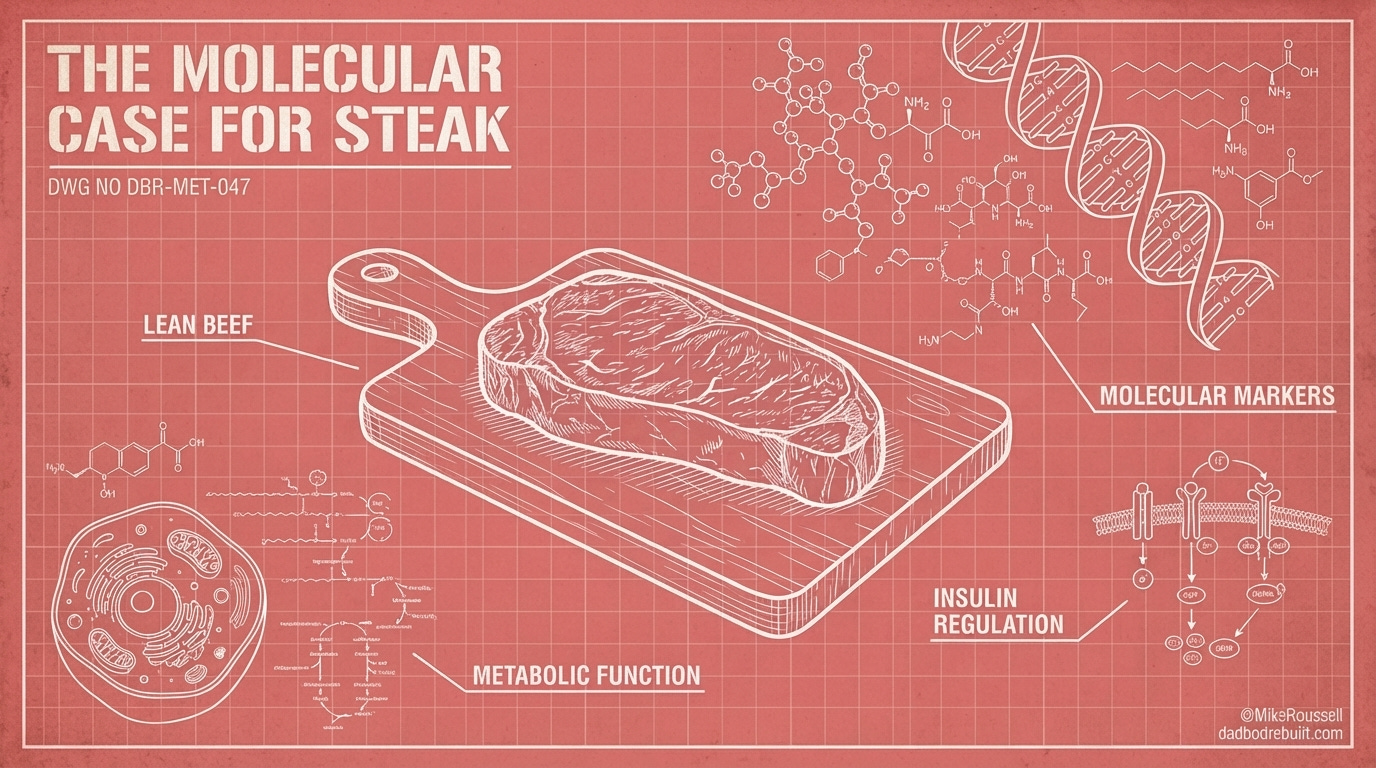
For years, you’ve been told to cut back on red meat. Swap the steak for chicken. Choose plant protein when you can. It’s become so ingrained that ordering a burger feels like a minor rebellion against your own health. But a team of researchers at the University of Texas at Austin, led by nutrition scientist Heather Leidy, wanted to know what’s actually happening at the molecular level when beef is on the plate—or off it.
Leidy’s team took 16 women and fed them two carefully controlled diets for a week each. Both diets were healthy, plant-forward patterns. The only difference: one included two servings of lean beef per day (about 7.5 ounces total), while the other had zero beef, replacing it entirely with plant proteins like tofu and seitan. At the end of each week, they drew blood and examined something most studies never look at—microRNAs, the tiny molecular messengers that regulate how your genes express themselves.
Here’s where it gets interesting. Of the 12 metabolic markers they tracked, one stood out: miR-15b-5p expression was significantly higher after the beef week compared to the plant-only week. That matters because higher miR-15b-5p was inversely correlated with insulin resistance and markers of poor blood sugar control. Translation: the people with more of this marker had better metabolic function. And here’s the kicker—those favorable correlations only showed up in the beef group. The plant-only group? No relationship at all.
The mechanism comes down to an enzyme called PDK4, which controls your body’s switch between burning glucose and tapping into mitochondrial energy production. miR-15b-5p helps regulate that switch. When it’s expressed properly, your metabolic machinery runs cleaner. The beef appeared to support that process in ways the plant-only pattern didn’t.
Two servings of lean beef—think a palm-sized portion of flank steak at lunch and dinner—as part of an otherwise healthy diet. Not permission to crush a bacon cheeseburger every day. But real evidence that quality red meat has a place on your plate.
Piacquadio KA, et al. The Journal of Nutrition. 2024;154:1758-1765. doi:10.1016/j.tjnut.2024.04.026